
We Asked Women's Health Experts for Their #1 Hormone Tip
👩🏻🔬Hormones don’t operate in isolation. They respond to signals, and one of the most powerful signals your body receives every single day is how stable your blood sugar is.
So we asked practitioners who work directly with women navigating PMS, fatigue, mood shifts, and cycle irregularities to share one habit they consistently see make a real difference. While their wording varied — protein-first mornings, blood sugar regulation, chrono-nutrition — their answers pointed to the same foundational principle.
How It All Comes Back to Stable Blood Sugar
Blood sugar refers to the amount of glucose (a type of sugar) circulating in your bloodstream. Glucose is your body’s primary source of energy. When you eat — especially carbohydrates — your blood sugar rises. In response, your body releases insulin to help move that glucose into your cells for energy.
The problem isn’t that blood sugar rises — that’s normal. The issue is when it rises too quickly and then crashes. These spikes and dips can trigger stress hormones like cortisol, increase inflammation, disrupt sleep, and influence reproductive hormones like estrogen and progesterone. Over time, this instability can show up as fatigue, irritability, stronger PMS, cravings, and cycle irregularities.
When blood sugar stays steady, your body operates in a more regulated state. Energy becomes more consistent. Mood stabilises. Sleep improves. And hormonal fluctuations feel less extreme. That’s why so many experts emphasise small, daily habits that support blood sugar balance — starting first thing in the morning.
Habits That Support Blood Sugar Stability
1. Start the Day With Protein, Before Coffee
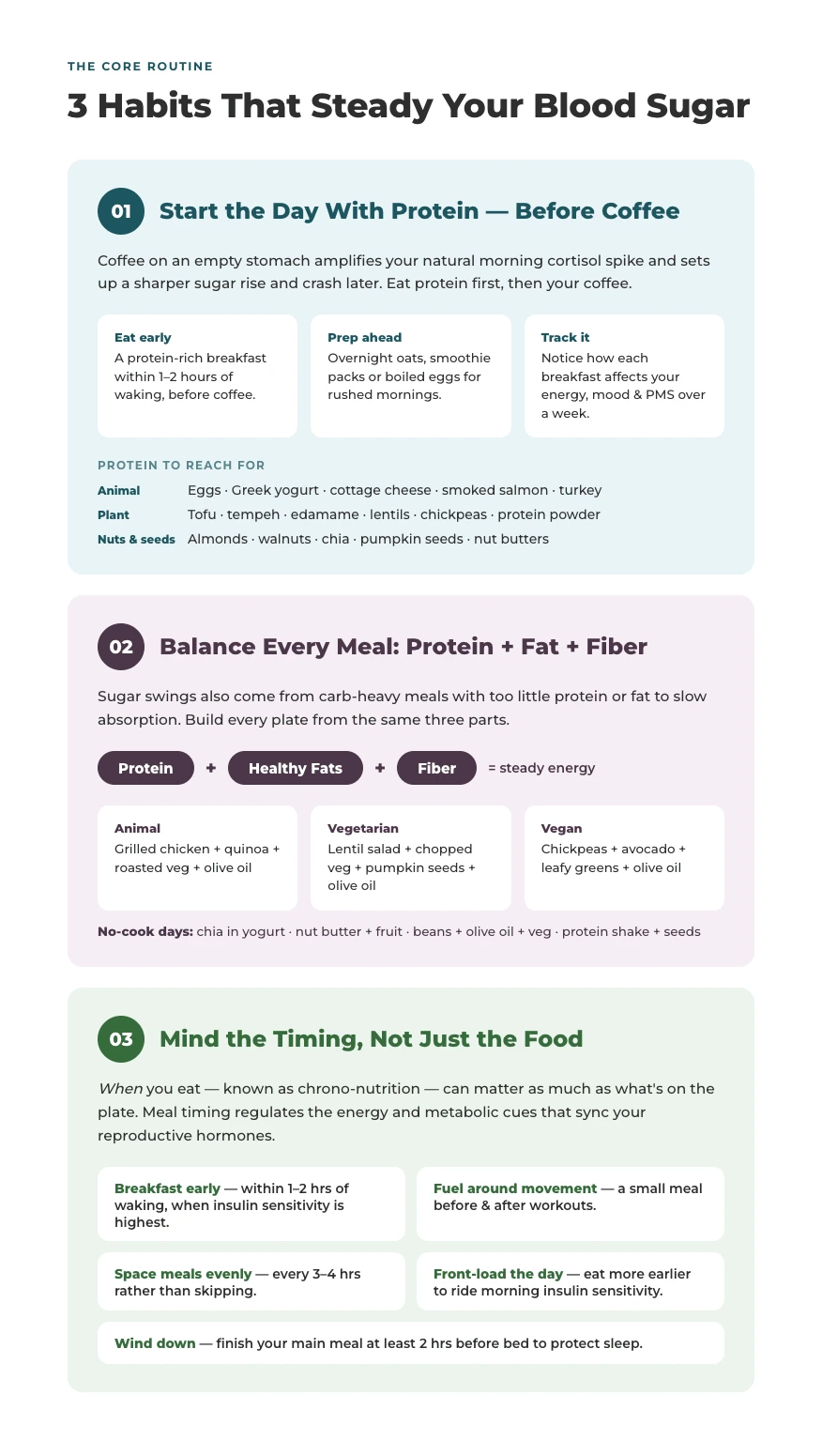
For many women, the day begins with coffee — sometimes on an empty stomach. While caffeine can feel energising in the moment, having it before eating can amplify your natural morning cortisol spike and contribute to a sharper blood sugar rise and crash later on.
When we reached out to Francesca Liparoti, a perimenopause nutritionist, and she pointed to one foundational habit she consistently sees improve energy, mood, and PMS symptoms in her clients:
“One of the most impactful habits I encourage my clients to adopt is eating a protein-rich breakfast within an hour of waking, before any coffee. I recently worked with a client who simply stopped drinking coffee on an empty stomach and began having protein first; within weeks her energy stabilised, her afternoon crashes disappeared, her sleep improved, her PMS was reduced, and she felt noticeably less irritable. Starting the day with protein helps stabilise blood sugar and lowers the cortisol spike that coffee alone can trigger, creating a far more stable hormonal environment. It’s a small shift that can make a profound difference.” - Francesca Liparoti
When we spoke with Maria, founder of Mi Ciclo Es Mio, she shared a powerful perspective on how the way we start our mornings can influence hormonal balance from both a physiological and emotional standpoint. In her work with women, she consistently sees how small shifts in the first meal of the day can create noticeable improvements in energy, cravings, and cycle regulation.
“One of the most transformative habits for hormonal balance is how you choose to start your day. Many women have only coffee or something quick and sweet for breakfast, unknowingly triggering a stress and insulin spike that later shows up as more cravings, more inflammation, and more premenstrual symptoms. In a consultation, we focus on including a breakfast with protein and healthy fats, and we see real changes: more stable energy, less afternoon anxiety, and more regulated cycles. Hormonal balance doesn’t start with a supplement — it starts with nourishing instead of punishing. Your body is not the enemy; it’s a system that responds to how you care for it from the very first hour.” - María Requejo
Together, these insights show that both the composition of your breakfast and the mindset you bring to your morning play a critical role in stabilising blood sugar, regulating cortisol, and supporting overall hormonal balance throughout the day.
Practical Steps to Build a Hormone-Supporting Morning Routine
- Eat a protein-based meal within 1-2 hours of waking, making sure to delay coffee until after your breakfast. A few options to choose from:
- Animal-based: eggs, Greek yogurt, cottage cheese, smoked salmon, lean turkey or chicken
- Plant-based: tofu, tempeh, edamame, lentils, chickpeas, plant-based protein powders
- Nuts & Seeds: almonds, walnuts, chia seeds, pumpkin seeds, nut butters
- Plan and prep in advance if your mornings are often rushed. Preparing breakfast the night before (overnight oats, smoothie packs, boiled eggs) makes it easier to eat nutrient-dense food first thing, reducing reliance on quick, high-sugar options.
- Track your energy – Observe how different breakfast choices affect your energy, mood, and PMS symptoms over a week or two. Noticing patterns helps you personalise your routine for maximum hormonal support.
2. Balance Every Meal With Protein, Healthy Fats, and Fiber
While breakfast sets the tone, what happens throughout the rest of the day matters just as much. Blood sugar instability can also come from meals that are heavily carbohydrate-based without enough protein or fat to slow absorption.
When we spoke with Katie Bressack, a holistic health coach with a specialty in hormonal health and co-host of the Period Besties Podcast, she emphasised that blood sugar regulation is often the foundation of the improvements she sees in practice.
“I spend a lot of time supporting my clients with blood sugar regulation, it’s really the foundation to our health especially hormonal health. I see huge improvements in sleep, PMS, cravings, stress and overall hormone balance. One of the best things you can start to do is combining proteins with healthy fats and fiber at every meal to support your hormones.” - Katie Bressack
Meal Ideas That Stabilise Blood Sugar
The key to steady energy and balanced hormones is including protein, healthy fats, and fiber in every meal as mentioned by Katie. Here’s a few ideas — whether you like to cook or just want quick, no-fuss options:
Animal-Based Meals
- Lunch: Grilled chicken + roasted veggies + quinoa + olive oil (protein: chicken, fat: olive oil, fiber: veggies/quinoa)
- Dinner: Baked salmon + sweet potato + sautéed greens + avocado (protein: salmon, fat: avocado/olive oil, fiber: greens/sweet potato)
- Snack: Boiled egg + handful of almonds + apple (protein: egg, fat: almonds, fiber: apple)
Vegetarian Meals
- Lunch: Lentil salad + chopped veggies + olive oil + pumpkin seeds (protein: lentils, fat: olive oil/pumpkin seeds, fiber: veggies/lentils)
- Dinner: Tofu stir-fry + mixed vegetables + sesame oil + brown rice (protein: tofu, fat: sesame oil, fiber: vegetables/rice)
- Snack: Greek yogurt + berries + flax seeds (protein: yogurt, fat: flax, fiber: berries)
Vegan Meals
- Lunch: Chickpea salad + avocado + leafy greens + olive oil (protein: chickpeas, fat: avocado/olive oil, fiber: greens/chickpeas)
- Dinner: Tempeh + roasted vegetables + quinoa + tahini drizzle (protein: tempeh, fat: tahini, fiber: vegetables/quinoa)
- Snack: Nut butter + whole-grain crackers + banana slices (protein: nut butter, fat: nut butter, fiber: crackers/banana)
Quick “no-cook” options for busy days
- Add chia seeds or ground flax to yogurt, smoothies, or overnight oats (protein/fiber/fat combo depending on base)
- Pair nut butter with fruit or whole-grain crackers
- Snack on nuts and seeds + a boiled egg
- Mix canned beans with olive oil and chopped veggies for a simple salad
- Keep protein shakes or plant-based powders on hand to add to fruit + seeds
3. Pay Attention to When You Eat, Not Just What You Eat
Timing also plays a significant role in in blood sugar stability, as well as our metabolism and overall hormonal health.
When we spoke with Holly Dunn, a Registered Nutritionist (ANutr) and Registered Nutritional Therapist (mBANT, CNHC), specialising in functional hypothalamic amenorrhea and hormones, she highlighted the importance of what’s known as chrono-nutrition — the relationship between meal timing and hormonal regulation.
“When it comes to hormones, it’s not just what and how much we eat that matters. When we eat can often have a more powerful impact. Research consistently demonstrates that the timing of nutrition has an essential role to play in optimal hormone health and physiological function. When we eat directly regulates the energy balance and metabolic cues required to synchronise reproductive hormones.” - Holly Dunn
“Reducing time spent in a catabolic (fasted) state can also help stabilise blood glucose and lower stress hormones, supporting optimal female hormone health. When working with clients, we frequently discuss the concept of “chrono nutrition. Simple (yet impactful) changes like prioritising breakfast within 1-2 hours of waking and nourishing your body more consciously around your physical activities – these can be game-changing.” - Holly Dunn
Practical Guide to Timing Your Meals for Hormonal Balance
- Eat breakfast within 1–2 hours of waking – In healthy individuals, cortisol and insulin sensitivity are generally highest in the morning. Breakfast signals to your body that it is safe to start the day, supports a healthy metabolism, hormone regulation, more stable blood sugar, and better energy levels overall.
- Fuel around activity – Eat a balanced meal or snack before and after workouts to replenish energy reserves and reassure the brain, regulating cortisol and other hormonal systems. Examples:
- Pre-workout: banana + nut butter or a small smoothie
- Post-workout: eggs + avocado toast, or tofu stir-fry
- Space meals evenly – Aim to eat every 3–4 hours rather than skipping meals, which can lead to blood sugar dips, cravings, and increased cortisol.
- Front-load energy (food) intake when possible – Eating more during and in the earlier parts of the day can harness insulin sensitivity, support energy, and aid in hormone regulation by modulating cortisol and signalling to the brain that energy is available to support all physiological processes optimally. Example:
- Breakfast: omelette + veggies + whole-grain toast, or overnight oats with Greek yoghurt or kefir, banana + nuts + seeds
- Lunch: chicken or tempeh salad with quinoa or brown rice
- Dinner: lightly cooked vegetables + quality protein + complex carbohydrates (such as wholegrain rice, beans, or sweet potatoes). Including complex carbohydrates in the evening can help replenish and optimise muscle glycogen restoration, support recovery and overall hormonal balance in active women.
- Be mindful of late-night eating – Eating close to bedtime may disrupt circadian rhythms, interfere with melatonin production, and affect sleep quality. Finishing your main meal at least 2 hours before bed can help prepare your metabolism to slow down, rest, and repair overnight. If you’re hungry closer to bedtime, opt for a small, balanced snack like Greek yogurt with berries, or a small handful of nuts and fruit.
Here’s an example of how to structure your day to stabilise blood sugar, reduce unnecessary reliance on cortisol, and optimise hormone health. All meals combine protein + healthy fats + fibre where possible.
| Time | Meal | Example | Why It Works |
|---|---|---|---|
| 7:30 AM | Breakfast (within 1–2 hours of waking) | Omelette with spinach, mushrooms, and avocado + 1 slice whole-grain toast | Provides protein, fat, and fiber early to stabilise cortisol and glucose; signals the body it’s safe to start the day |
| 10:30 AM | Mid-Morning Snack | Greek yogurt + berries + handful of almonds | Keeps blood sugar steady between breakfast and lunch; protein + fiber + fat prevents spikes |
| 1:00 PM | Lunch | Grilled chicken or tempeh salad with quinoa, mixed greens, olive oil, and seeds | Balanced meal with protein, fat, and fiber; supports energy and prevents afternoon cravings |
| 3:30 PM | Afternoon Snack / Pre-Workout | Banana + nut butter or roasted chickpeas | Provides fuel for late afternoon activities while maintaining stable glucose levels |
| 6:00 PM | Dinner | Baked salmon or tofu + roasted vegetables + baked sweet potato | Lighter evening meal reduces late-night insulin spikes; protein supports satiety; carbs for overnight muscle glycogen restoration |
| 8:30 PM | Optional Evening Snack (if needed) | Handful of nuts + berries or a small smoothie | Only if genuinely hungry; keeps blood sugar stable without overloading the system before sleep |
Small Lifestyle Shifts That Complement Blood Sugar Control
Food is just one piece of the hormone puzzle. Sleep, stress management, movement, and hydration all influence blood sugar and hormonal balance. Making small adjustments in these areas can amplify the benefits of the habits we’ve already covered.
- Prioritise Sleep: Hormones like cortisol and insulin follow daily rhythms. Consistent sleep supports stable blood sugar and helps regulate reproductive hormones.
- Manage Stress: Chronic stress can trigger blood sugar spikes and cravings. Short breathing exercises, meditation, or a walk after meals can help keep your hormones in check.
- Move Your Body: Light activity, especially after meals, improves insulin sensitivity and supports blood sugar balance. Even a 10–15 minute walk can make a difference.
- Stay Hydrated: Dehydration can mimic fatigue or cravings and affect metabolism. Drinking water consistently supports energy and overall wellbeing.


Next Steps: How to Personalise Your Routine
Creating a routine that truly supports your hormones is all about observation, experimentation, and alignment with your natural cycle. Here’s how to make the habits in this article work specifically for you:
1. Start With One Habit at a Time
Pick a single habit — like a protein-rich breakfast or balancing protein, fat, and fiber at lunch — and focus on it for one week. This lets you track the effect without feeling overwhelmed.
2. Track Your Cycle and Energy
Your energy, cravings, and mood may fluctuate naturally throughout your cycle. Keeping a record of how you feel alongside your meals, movement, and sleep helps you see what works best in each phase.
3. Plan Your New Routine
Kilova.app can help turn these observations into a personalised, repeatable schedule. For example:
- Menstrual Phase (Days 1–5): Prioritize iron-based meals.
- Follicular & Ovulatory Phase (Days 6–14): Motivation is rising — use this strategically for your projects.
- Luteal Phase (Days 15–28): Focus on stress-management strategies to support your mood and blood sugar.
By using Kilova’s calendar, you can set repeating tasks for each phase, so your meals, workouts, and self-care practices automatically align with your cycle. This makes hormone-friendly routines easier to stick to and helps you anticipate when certain habits are most impactful.
4. Experiment and Adjust
Notice what changes in energy, cravings, sleep, and PMS symptoms as you tweak timing, portion sizes, and activity levels. Small, consistent adjustments over a few cycles give the clearest picture of what works for you.
5. Talk to an Expert if Needed
Some hormonal imbalances or persistent symptoms may require guidance from a nutritionist, hormone specialist, or medical professional. They can help you identify underlying issues, personalise nutrition and movement plans, or provide targeted interventions. Using expert guidance alongside personal tracking ensures your routine is safe and effective.
Conclusion
Hormonal health doesn’t have to be complicated. As our experts have shared, stable blood sugar is the foundation — from starting the day with protein to balancing every meal and timing food in line with your body’s natural rhythms.
A special thank you to the nutritionists for sharing their insights and professional advice. Their expertise have made this article actionable, realistic, and deeply informed.
Remember, small, consistent changes add up over time. Start with one habit, track your results, and adjust along the way — your hormones will thank you.

Comment